Why Tyler LeBaron Attempting a World Record to Advance Mitochondrial Research
Bringing together my passions for science, strength, and endurance to help advance human health.
By
October 27, 2026
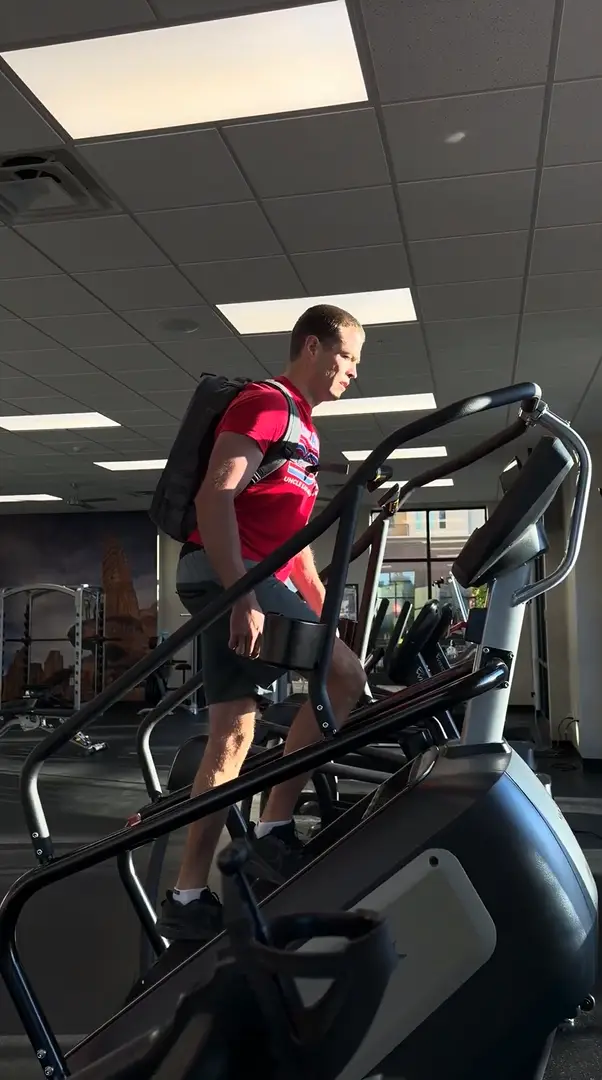
On November 14, 2026, I’ll be attempting something I’ve never done before: breaking a Guinness World Record by running a half marathon while carrying a 40-pound rucksack.
The current record is 1:36:56, established in 2011. To break it, I’ll need to maintain approximately a 7:24-per-mile pace for 13.1 miles while carrying an additional 25% of my body weight. I’ll be making the attempt at the Snow Canyon Half Marathon in St. George, Utah.
I’m excited about the challenge, but what makes this particularly meaningful to me is that I’m doing it in collaboration with Countdown, a nonprofit organization dedicated to advancing mitochondrial research.
For the first time, I have an opportunity to bring together several of my greatest interests in a way that may extend beyond my own personal accomplishments.
Why pursue a world record?
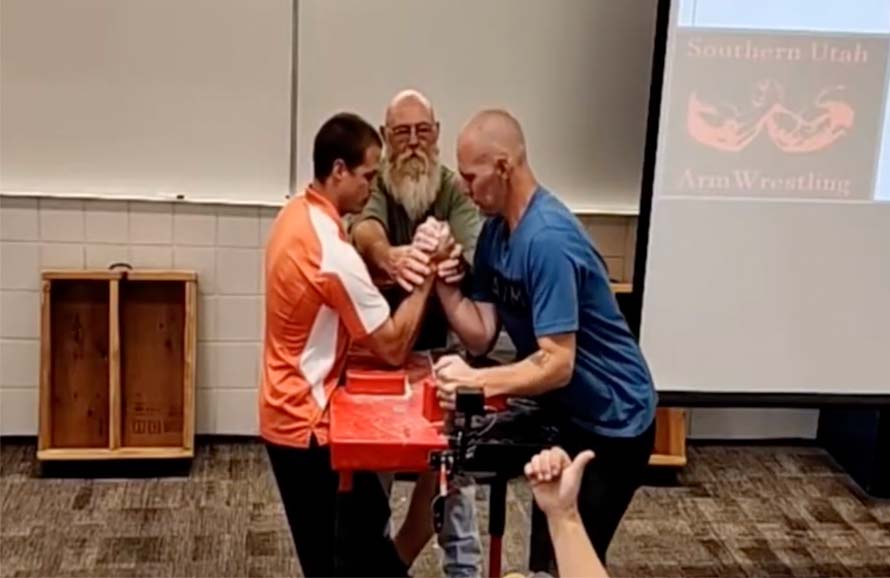
I’ve always loved testing the limits of human performance. Over the years, I’ve competed in running, obstacle-course races, stair climbing, weightlifting, professional arm wrestling, wrestling, martial arts, and other athletic events. I enjoy the training, competition, and challenge of finding out what I’m capable of, particularly when trying something new.
I’ve been fortunate to perform competitively across several of these disciplines, but I’ve never considered myself the fastest runner, the strongest athlete, or the most accomplished scientist. I simply have an enduring fascination with human physiology, both understanding it scientifically and exploring it through physical performance.
When I discovered the world records for running with weighted rucksacks, I was immediately interested. Here was an unusual challenge requiring a combination of speed, strength, and endurance, three qualities I’ve spent much of my life trying to develop.
And, of course, the possibility of breaking an actual world record was exciting!
But as I began seriously considering the attempt, I found myself asking another question.

What would be the point?
Of course, pursuing a personal goal can be worthwhile in itself. I enjoy competing and trying to improve. But could this particular challenge also accomplish something beyond personal satisfaction? Could it inspire other people, help them learn something about their own health, or contribute to scientific research?
The more I thought about it, the more I realized there was an opportunity to connect things that have been central to my life for decades.
Where science and athletics come together
My academic background is in biochemistry, exercise science, and physiology. For more than 16 years, my research has focused primarily on molecular hydrogen (H₂), investigating its biological effects and potential therapeutic applications. I’ve also spent years teaching exercise physiology, bioenergetics, and related subjects while continuing to train and compete in various sports.
Although these pursuits might seem different, I’ve always regarded them as closely connected.
Much of my interest in science comes from wanting to understand how the human body works, why it becomes diseased, and how we might improve its health and function. Likewise, much of my interest in athletics comes from experiencing firsthand how remarkably the body can respond and adapt to physical challenges.
And underlying both is a common theme: cellular health and function.
Our health ultimately depends on the coordinated activities of trillions of cells, and among their most important components are the mitochondria.
Mitochondria are best known for producing most of the ATP that cells use to power essential biological processes, including muscle contraction. But their functions extend far beyond energy metabolism. They also participate in cellular signaling, metabolic regulation, stress responses, and processes associated with aging and disease.
This is why mitochondrial biology is relevant not only to athletes trying to improve their performance, but also to researchers investigating conditions ranging from metabolic and neurodegenerative diseases to primary mitochondrial disorders.
In fact, an important part of our recent molecular hydrogen research has focused on how H₂ may influence mitochondrial electron transport and adaptive cellular signaling pathways (add reference). Although much remains to be established about its clinical applications, this work illustrates how investigating one small molecule may reveal new insights into mitochondrial biology.
Molecular hydrogen is only one area of investigation, of course. Exercise, nutrition, and other lifestyle interventions can also influence mitochondrial function, while emerging therapeutic approaches may eventually offer additional options for patients with mitochondrial-related diseases.
For me, this is what makes mitochondrial research so fascinating. It connects fundamental molecular biology to some of the most important questions in human health, disease, performance, and longevity.
I’ve previously written about cellular bioenergetics and how our cells produce ATP, but this world record attempt offers an opportunity to bring these scientific concepts into a more tangible, personal experience.
Why I reached out to Countdown
I was already serving on the Scientific and Medical Advisory Board of Countdown, an organization dedicated to advancing mitochondrial research and supporting the development of new scientific knowledge and potential therapies.
Initially, I considered whether the world record attempt might be an opportunity to raise awareness of molecular hydrogen research through the Molecular Hydrogen Institute, the 501(c)3 nonprofit organization I founded in 2013.
But I realized that the broader mission of Countdown was especially well suited to what I wanted to accomplish.
Mitochondrial health isn’t about one molecule, one therapy, or one intervention. It encompasses an enormous field of research with implications for many diseases, healthy aging, and human performance.
And one of my primary goals has always been to improve human health through education and science.
So, I contacted Countdown and explained my idea. What if I could use these world record attempts to help bring greater public awareness to mitochondrial health and raise support for research that could ultimately improve people’s lives?
They were immediately enthusiastic.
What began as a personal athletic challenge became an opportunity to combine my interests in scientific research, education, communication, and physical performance in support of an organization whose mission I genuinely believe in.
I’m personally funding my training and participation in the event. This collaboration isn’t about obtaining athletic sponsorship for myself. Rather, I’m hoping my efforts can help generate greater awareness, engagement, and financial support for Countdown and its mitochondrial research initiatives.
I don’t know how much attention these attempts will generate, but I’m excited to find out what we might accomplish together.
The meaning behind the 40 pounds
There’s also something symbolic about running with an additional 40 pounds.
I’ve chosen to carry this weight, and when I cross the finish line, I can take it off.
For people living with mitochondrial diseases and other serious health conditions, the burdens they face aren’t so easily removed. These conditions can profoundly affect energy availability, physical capacity, and quality of life. My athletic challenge certainly isn’t comparable to the challenges many patients experience, but perhaps the weight can serve as a reminder of why advancing research matters.
There’s another, more practical connection I hope people will appreciate.
Carrying additional weight makes running considerably more demanding. My pace slows, energy requirements increase, and the mechanical stress on my muscles and joints becomes greater. Yet with appropriate training, the human body can make remarkable adaptations.
Exercise is one of the most extensively studied interventions for improving mitochondrial capacity and metabolic health, particularly in skeletal muscle. Regular physical activity can stimulate mitochondrial biogenesis, improve oxidative capacity, and contribute to numerous other physiological adaptations.
Of course, the appropriate type and intensity of exercise depend on individual circumstances, especially for people with medical conditions. Not everyone can or should attempt extreme physical challenges, nor are all forms of mitochondrial dysfunction reversible through exercise.
But improving your health doesn’t require setting a world record.
If you’re carrying extra body weight, haven’t exercised regularly in years, or simply feel that your physical capabilities are limited, I hope this journey can offer some encouragement to begin working toward whatever improvement is realistic for you.
That might mean walking a little farther, improving your strength, becoming more physically active, or setting a personal goal that currently seems difficult.
You don’t need to compete with anyone else to benefit from the remarkable adaptability of the human body.
Progress doesn’t always mean becoming exceptional. Sometimes it means becoming a little healthier, stronger, or more capable than you were yesterday.
Excitement, uncertainty, and learning to believe it’s possible
I should also acknowledge that preparing for this attempt has been much more challenging than I initially anticipated.
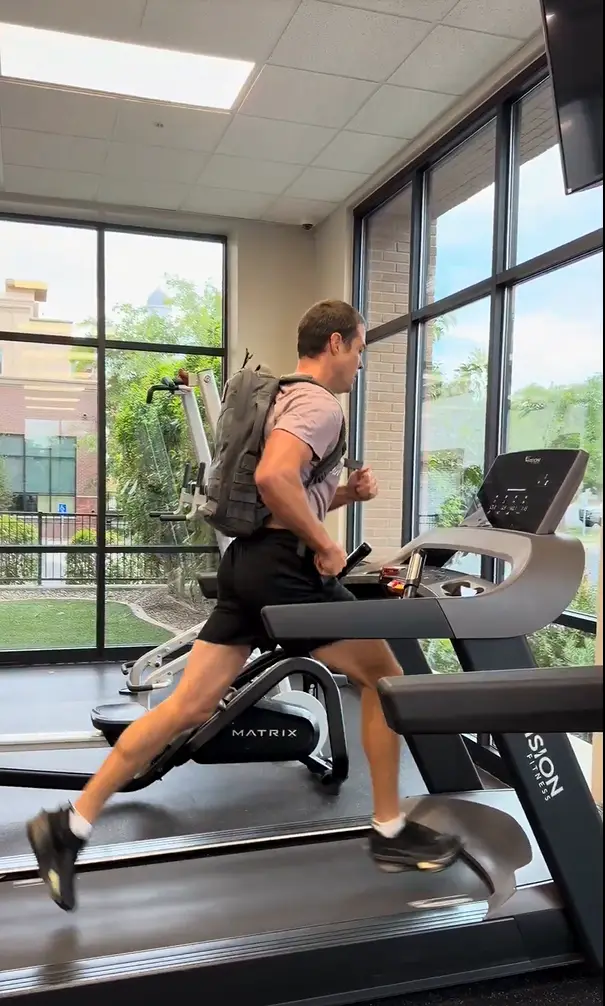
I’ve been running and training for many years, but running with 40 pounds on my back is a completely different experience.
During some of my initial training sessions, my heart rate approached near maximum after only a mile. I remember doing a five-mile weighted run that was so difficult I seriously questioned whether breaking this record was realistic.
At the same time, I was having conversations with Countdown, making plans, discussing logistics, and sharing this vision with other people. I was excited about the possibilities, but internally I was also feeling nauseous under the considerable pressure and uncertainty about whether I could actually accomplish what I was proposing.
There were moments when I genuinely wondered whether I’d taken on more than I could handle.
Interestingly, as someone who studies physiology, I understood many of the mechanisms contributing to what I was experiencing. But knowing the science certainly doesn’t eliminate the physical discomfort or psychological pressure!
Fortunately, training has continued to progress. Some of my more recent sessions, including a longer outdoor run this past weekend, have given me substantially greater confidence that the record is within reach.
I still don’t know exactly what will happen on November 14. Weather, pacing, muscular fatigue, and countless other factors can influence performance. But I believe that with the right preparation, recovery, and race-day execution, I have a very real opportunity to break the record.
Regardless of the result, I’m already learning a great deal about weighted running, muscular endurance, recovery, and the relationship between scientific knowledge and actual physical performance.
I look forward to sharing more about that process, including the training challenges, mistakes, physiological adaptations, and even the nervousness and self-doubt that have accompanied this experience.
More than a world record
My hope is that November 14 will be the beginning of something larger.
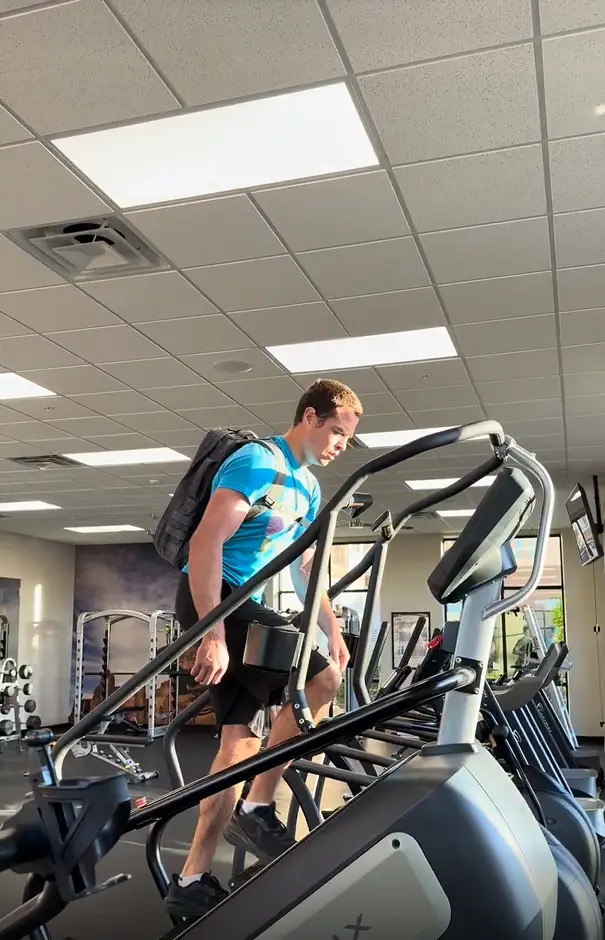
I’m already considering additional world record attempts involving different distances and weights. Each would provide a new physical challenge, but more importantly, another opportunity to communicate the importance of mitochondrial health and research.
I’m grateful that Countdown shares this vision and is willing to collaborate with me in pursuing it.
I also hope this experience encourages others to take a greater interest in their own health and the remarkable biological systems that make life possible.
We still have so much to learn about mitochondria, their involvement in disease, and how to optimize their function. Continuing this research may lead to new therapies, better preventive strategies, and improved quality of life for many people.
In the meantime, we already know that physical activity is one of the most powerful things many of us can do to improve our health. Sometimes the most important step isn’t discovering a new intervention, but actually putting into practice what we already know.
I’ve spent much of my life studying physiology, researching molecular mechanisms, teaching science, and testing my own physical capabilities. Having an opportunity to bring these interests together in a way that might also benefit others is deeply meaningful to me.
I want to challenge myself to see what’s possible, help others understand the science behind human health and performance, and hopefully inspire people to discover more of what’s possible for themselves.
And if these efforts can also help advance mitochondrial research and improve the lives of others, that would mean far more to me than the world record itself.
If you’d like to follow this journey or support the research, I invite you to visit Countdown’s official World Records campaign. I’ll also continue sharing my training experiences, the science behind them, and future challenges here on my website, which you can subscribe to. Thank you to everyone who has encouraged and supported me along the way. I’m excited, admittedly a little nervous, and looking forward to seeing what November 14 brings!
Tyler W. LeBaron, MSc., PhD.
Tyler W. LeBaron, MSc, PhD is a is a researcher and educator who translates complex science into practical insight on health, performance, and human potential. He is the Founder and Executive Director of the Molecular Hydrogen Institute (a science-based 501(c)3 nonprofit) and an adjunct professor of exercise physiology and chemistry at Southern Utah University. Tyler is known for evidence-based, engaging presentations that challenge assumptions, clarify emerging science, and inspire high-performing individuals and organizations. He has 80+ peer-reviewed publications, 2,000+ citations, top 0.5% recognition in oxidative stress, and has delivered invited talks on six continents.
Disclaimer: This blog is for general informational purposes only and does not constitute the practice of medicine, nursing or other professional health care services, including the giving of medical advice, and no doctor/patient relationship is formed. The use of information on this blog or materials linked from this blog is at the user’s own risk. The content of this blog is not intended to be a substitute for professional medical advice, diagnosis, or treatment. Users should not disregard, or delay in obtaining, medical advice for any medical condition they may have, and should seek the assistance of their health care professionals for any such conditions.
You may also like these…