Is Hydrogen Water a Hoax, or Does It Really Work?
Some of what is sold as hydrogen water is a scam, and some of it is not. Underneath the marketing…

By
October 23, 2026
Some of what is sold as hydrogen water is a scam, and some of it is not. Underneath the marketing there are peer-reviewed human trials and a biological mechanism worth studying. The evidence is still early, though, and it is nowhere near what many products claim.
I started researching hydrogen water in 2009, and I direct the Molecular Hydrogen Institute, a science-based nonprofit. The question of whether hydrogen water is a hoax is two questions. The first is whether molecular hydrogen does anything measurable in the body. The second is whether a given product delivers hydrogen and tells the truth on its label. A study can show a measurable effect while the bottle on the shelf holds almost no hydrogen. That is why two people can reach opposite verdicts and both be partly right.
What Is Hydrogen Water?
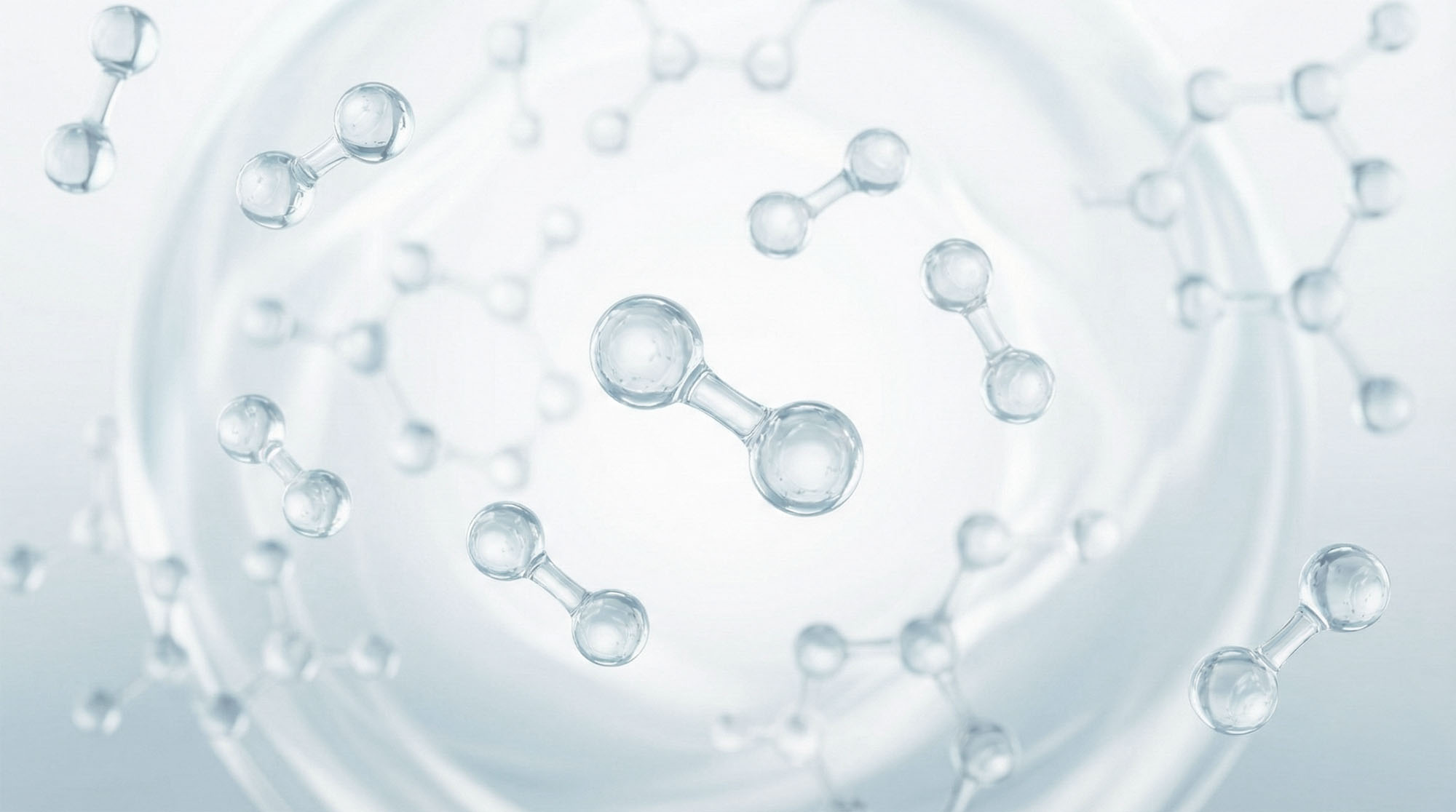
Hydrogen water is ordinary water with molecular hydrogen gas (H2) dissolved in it. Molecular hydrogen is two hydrogen atoms bonded together, and it is a gas with no taste or smell. The gas dissolves in the water, and the water molecules themselves do not change.
The question I hear most is whether all water is already hydrogen water, since water is H2O. The hydrogen atoms in a water molecule are bonded to oxygen, so they are not available as hydrogen gas. Oxygen works the same way. Fish cannot breathe the oxygen that is part of each water molecule, which is why an aquarium typically uses a bubbler to dissolve oxygen gas into the water. Hydrogen water carries extra hydrogen as a dissolved gas, and that is the form the studies test.
How I Started Studying Hydrogen Water
In 2009, as a new biochemistry undergraduate, I was looking into alkaline ionized water. I reasoned that if even a fraction of the claims were true, it was worth trying. My professors told me that water is not a buffer and that a little lemon juice would neutralize it. That answer shaped the question I still ask first. Before we try to figure out how something works, we first need to figure out if it works.
My first study asked whether this water could improve athletic performance. In 2010 I presented pilot research showing that alkaline electrolyzed water extended time to exhaustion during lactate threshold running. Measuring the water’s oxidation-reduction potential, a reading of how readily it gives up electrons, led me to the hydrogen gas that electrolysis dissolves into it.
Anyone asking whether hydrogen products are a scam should also know my commercial relationships. Besides leading the Molecular Hydrogen Institute, I am a co-founder and the Chief Scientific Officer of InhaleH2, a company that makes a hydrogen inhalation device. The two roles are separate, and my full disclosures are on my Quotes & Media page.
Is Hydrogen Water the Same as Alkaline Water?
No. Alkaline water and hydrogen water describe two different properties, and a glass of water can have either one without the other. Alkaline water has a high pH. Hydrogen water has dissolved hydrogen gas.
The word “hydrogen” causes much of the confusion. The pH of water depends on hydrogen ions (H+), which are single protons. Molecular hydrogen (H2) is a neutral gas, and it does not change pH. A common claim is that hydrogen water adds hydrogen ions to make your blood more alkaline. Adding hydrogen ions would make blood more acidic, and hydrogen water does not add them at all. My article on water, pH and the hydrogen ion explains how hydrogen ions set the pH of water.
The same chemistry answers a common worry about stomach acid. H2 is neither an acid nor a base, so stomach acid does not neutralize it.
| Alkaline water | Hydrogen water | |
| What defines it | A pH above 7. | Dissolved molecular hydrogen gas (H2). |
| Does it change the water’s pH? | Yes. A high pH is what makes it alkaline. | No. Dissolving hydrogen leaves the pH where it was. |
| Contains hydrogen gas | Not necessarily. Alkaline water made by adding minerals has no added hydrogen. | Yes, by definition. |
Because pH has nothing to do with dissolved hydrogen, a pH reading tells you nothing about how much hydrogen is in a glass. A strongly alkaline water can contain no hydrogen at all, and a neutral water can contain a great deal of it.
The two were easy to confuse because a water ionizer makes both at once. At the ionizer’s negative electrode, the cathode, electricity splits water into hydrogen gas and hydroxide ions. The hydroxide ions raise the pH, and the hydrogen gas dissolves into the same water. Even so, ionizer water can hold anywhere from almost no hydrogen to about 1.6 milligrams per liter.
Why Hydrogen Water Has a Scam Reputation
The scam reputation started with alkaline ionized water. Research on ionizer water picked up in the 1990s, and studies reported measurable biological effects. Sellers explained those effects with the alkaline pH, with extra hydroxide ions and with “microclusters” of water molecules. None of those explanations held up, and the machines sold for a high price for many years. That combination of reported effects, wrong explanations and expensive machines earned the category its skepticism. Many people still dismiss hydrogen water as “just another alkaline water thing.”
The laboratory findings were not the problem. The early studies showed that something in the water was active without showing what it was. In 2007, a paper in Nature Medicine reported that hydrogen gas protects cells from oxidative damage, which gave researchers a chemical candidate to test.
Later experiments separated the hydrogen from the pH. In a 2014 rat study, rats drank alkaline water holding different amounts of dissolved hydrogen for two weeks before an aspirin injury to the stomach. The more hydrogen the water held, the less damage the stomach lining showed. At the same hydrogen level, raising the pH from 8.5 to 9.5 added no statistically significant protection. Studies like this one pointed to dissolved hydrogen as the best supported active component, a history my colleagues and I laid out in a 2022 review. Minerals in water can still be useful for their own reasons.
Three Ways People Responded to the Same Evidence
Picture the people who followed the ionizer research. They all saw the same two facts. The pH explanation was wrong, and the studies kept reporting effects. They split into three groups.
The First Group Credited the pH
The first group believed the alkaline pH did the work. Many of them moved to bottled alkaline water from the store, which in most cases has no added hydrogen. They paid for the one property the research never showed was doing the work.
The Second Group Threw Out Everything
The second group correctly rejected the pH explanation. Then they dismissed the whole body of research along with the bad explanation, including the effects that had been measured.
The Third Group Held Both Facts and Waited
The third group accepted that the pH explanation was wrong and that the studies were still reporting effects, and they waited for a better explanation. When dissolved hydrogen emerged as the likely cause, they could accept it and then look for better ways to get it.
The first two groups made the same mistake in opposite directions. Both let the quality of the explanation decide whether the evidence was real. Everyone needs a different amount of evidence before changing their mind, and all of us decide with our emotions more often than we like to admit. Most of us like to think we would have been in the third group. Which group would you have been in?
Which Hydrogen Water Claims Fail a Basic Test?
A claim deserves a closer look when someone can say what result would show it is wrong. If no possible result could count against a claim, there is nothing to test, and the burden of proof sits with the person selling it. Several common claims about hydrogen water fail this test.
“Six Times More Hydrating”
I know of no controlled trial showing that hydrogen water hydrates six times better than regular water. The claim also never says which measure of hydration it means, so there is nothing to check it against, and it is fair to ask the seller what a sixfold difference would look like.
“Smaller Water Clusters”
Liquid water does have structure, but its small groupings of molecules constantly break apart and form again. A bottled water whose “microclusters” stay small until you drink it is a different claim, and nobody has shown it. A 2010 study of six bottled waters advertised as having smaller clusters found boiling and freezing points no different from regular water, and it did not confirm the manufacturers’ claims.
“Nano-Infused by Quantum Entanglement”
Consider a seller who says the water is “nano-infused by quantum entanglement.” There are established ways to measure hydrogen in water, including gas chromatography, methylene blue titration and capturing the gas, and the seller refuses all of them. In their place, the seller offers testimonials and a team of “scientists.” A claim built this way refuses every possible test, so no evidence could ever count against it.
The same test applies to alkaline water, structured water and oxygen water. In my reading of the mainstream medical literature, research on these waters is limited, and it does not support the broad benefits they are sold on.
What Do Skeptics Get Right About Hydrogen Water?
The most serious objections come from people who are not selling anything, and they deserve an answer with numbers. Joe Schwarcz, a chemist at McGill University’s Office for Science and Society, raised two of them in a 2024 column. He pointed out that very little hydrogen dissolves in water, and he suspected that gut bacteria supply more hydrogen to the blood than a drink does. He also wrote that he was “not ready to throw the baby out with the bathwater,” which is a reasonable position for a skeptic to take. Each of these objections is partly true. None of them, on its own, shows that hydrogen water cannot work.
At room temperature and normal pressure, water exposed to pure hydrogen gas holds about 1.6 milligrams of hydrogen per liter, so a 500 milliliter bottle holds less than one milligram. That figure is the saturation point under those conditions, and it is not a ceiling. Water holds more hydrogen under higher pressure, and I have measured 8 milligrams per liter and higher in water made in a pressurized vessel.
| Objection | What is true | Why it does not settle the question |
| The dose is too small | At 1.6 milligrams per liter, a 500 milliliter bottle holds less than a milligram of hydrogen, far less by weight than a typical supplement. Supersaturated water holds more. | Studies report biological effects at doses in this range. Hydrogen is also the lightest molecule, so a milligram of it holds about 88 times as many molecules as a milligram of vitamin C. That compares molecule counts, not strength of effect. |
| The gas escapes once you open it | Hydrogen starts leaving the water as soon as the container is open. | It leaves over minutes to hours, not seconds. |
| Gut bacteria make more | Bacteria that ferment fiber make hydrogen every day, and over a whole day they can make far more than a bottle holds. | Gut hydrogen builds slowly over hours and varies widely from person to person. If often doesn’t reach micromolar H2 concentrations. A drink delivers a quick pulse. |
On dose, my reading of the studies is that biological effects appear at about half a milligram to a milligram of hydrogen a day. How clinically meaningful those effects are is still an open question.
On escaping gas, I have measured supersaturated water that started near 8.5 milligrams per liter. Left open on the counter, it stayed above 5 milligrams per liter at about 30 minutes and was near 3 at two hours. Drink it soon after opening anyway, because the level keeps dropping while it sits. Once you drink it, the extra hydrogen is mostly gone from your breath within about an hour.
Don’t Gut Bacteria Make More Hydrogen Than a Drink?
Gut bacteria do make hydrogen, but they make it slowly. Drinking hydrogen water raises breath hydrogen to its peak within 10 to 15 minutes. In a small study of eight healthy men given a 10-gram blend of prebiotic fibers, breath hydrogen from their gut bacteria started rising 35 to 170 minutes later, depending on the person. On average it peaked about three hours after the dose, at about the same breath level that hydrogen water produced in the earlier study. These were separate studies, and they measured breath rather than blood, but the timing is different. A drink delivers a quick pulse, and fiber delivers a slower rise that lasts longer.
The route may matter too. In a rat study, hydrogen from fermented fiber reached high levels in the portal vein, which carries blood from the gut to the liver. Arterial blood, which carries hydrogen to the rest of the body, held no more than 1.5% of that level. That study does not show how much gut hydrogen reaches the blood in people. My reading is that, for many people, a meal does not raise blood hydrogen as high as taking hydrogen directly, though some people do reach higher levels.
A rat study also suggests the pattern of delivery may matter. In a small study from Nagoya University, rats were given a chemical injury that mimics Parkinson’s disease. Hydrogen water reduced the damage, and short bursts of hydrogen gas protected four of six rats. Nonstop hydrogen gas and lactulose, a sugar that makes gut bacteria produce more hydrogen, had only marginal effects. It is one animal study, but it suggests a pulse of hydrogen may act differently from a steady supply.
How Much Hydrogen Water Should You Drink per Day?
There is no established daily amount. Trials have used different amounts. One gave people 900 milliliters a day of hydrogen-rich water, while I was part of used supersaturated water delivering more than 11 milligrams of hydrogen a day. The number that matters on any product is the hydrogen concentration at the moment you drink it, measured by a method you can check.
Does Hydrogen Water Work, and Is It Good for You?
Hydrogen water shows early, encouraging signals in small human studies, mostly in markers of inflammation and oxidative stress. It is not proven to treat or prevent any disease.
A 2024 systematic review titled “Hydrogen Water: Extra Healthy or a Hoax?” called for larger and longer human trials. I was one of its peer reviewers. The studies it covers span many different conditions, so they are not repeated confirmations of one result. Most of its human studies enrolled 60 people or fewer, and many measured blood markers or exercise performance, which is typical of the field.
Small studies can mislead, and Parkinson’s disease is the clearest example. A pilot trial of 18 people in Japan reported better symptom scores after 48 weeks of drinking hydrogen water. A larger trial of 178 people over 72 weeks found no benefit over placebo. From my conversations with the investigators, I learned that the placebo water also contained some hydrogen and that both groups declined less than patients usually do in similar trials. Those details are not in the published report, so the published result stands. A promising pilot is a reason to run a bigger trial, and the bigger trial is the one that tells you whether something works.
The results for cholesterol and blood sugar are preliminary. A study I was involved in 24-week trial in 60 adults with metabolic syndrome found lower cholesterol and blood sugar and better inflammation markers than placebo. A company that makes hydrogen tablets partly funded that trial and supplied the tablets, so weigh it with that in mind. The table below shows where the evidence stands for the claims people ask me about most.
| Claim | What the evidence looks like |
| Exercise and recovery | Small trials with mixed results. I would not tell an athlete to count on it. |
| Lower inflammation | The most consistent signal, seen in several small human trials. |
| Cholesterol and blood sugar | Preliminary, from a few small trials. |
| Slowing aging | No trial shows that it slows aging. One small six-month study of older adults reported favorable changes in some aging-related markers. Another study in flies found life-extension effects but that’s also not humans. |
| Detox | Too vague to test as sold, because “detox” claims rarely name a substance or a measure. Whether hydrogen supports the body’s own antioxidant defenses is a separate question that can be tested. |
| Immune boosting | No evidence of a general boost. Studies report effects on immune and inflammatory signaling. |
Is Hydrogen Just Another Antioxidant?
High doses of antioxidant supplements can blunt some benefits of exercise. In one well-known study, vitamin C and E blocked the improvement in insulin sensitivity that exercise produced. This can happen because exercise works partly through short bursts of reactive oxygen molecules that signal the body to adapt.
Hydrogen appears to behave differently. In the 2007 Nature Medicine study, it reduced the most damaging of these molecules, the hydroxyl radical, and left signaling molecules such as hydrogen peroxide and nitric oxide alone. Whether that explains its effects at the low levels reached in the body is still uncertain. In a rat study, vitamin C blunted the signals for building new mitochondria after a run, and inhaled hydrogen did not.
Part of hydrogen’s effect seems to come from switching on the cell’s own defenses, through a pathway called Nrf2 and other signaling pathways. For that reason, my colleagues and I have proposed that it may act as an “exercise mimetic and redox adaptogen.” The idea is that it may support some of the same adaptations exercise does. No one yet knows how hydrogen compares with other antioxidants in people.
Is Hydrogen Water Safe?
In 2014, the FDA said it had no questions about a company’s conclusion that hydrogen gas is generally recognized as safe (GRAS) as an ingredient in drinking water and beverages. Small trials report hydrogen water as well tolerated over weeks to months. That does not rule out situations where someone should avoid it, and long-term safety has not been established for every group of people.
So, Is Hydrogen Water a Scam?
Skeptics are right that no one has shown everyone should buy hydrogen water. Calling it a proven therapy would be dishonest to the research.
A claim should be proportional to the evidence behind it. When a claim outruns its evidence, that gap is a red flag, even if the claim later turns out to be true. On the science, calling hydrogen’s effects impossible or unstudied overstates the case, and the replicated clinical evidence is still far short of what the marketing claims. On the products, the answer depends on the product in your hand.
Hydrogen is not approved by the FDA to treat any condition, and hospitals do not use it as a standard treatment, partly because the large trials that approval requires have not been done. Those trials cost a great deal, and nobody can patent the hydrogen molecule itself, only devices and methods for delivering it.
Never having heard of hydrogen water is not evidence either way. Even strong findings, such as the evidence that smoking causes disease, took decades to become common knowledge.
You do not have to be a scientist to judge a hydrogen product. There are three questions that help you evaluate products:
- What is the hydrogen concentration when you drink it, and how was it measured? A number measured at the factory, or estimated from an oxidation-reduction potential reading, does not tell you what is in your glass.
- Which specific study supports this specific claim? A study of inflammation markers does not support a claim about aging or weight loss.
- What evidence would change the seller’s mind? If the answer is nothing, it is not a scientific conversation.
For the first question, look for a product that has been tested to the standards of the International Hydrogen Standards Association (IHSA). Those standards check for a minimum hydrogen concentration and for metals and other contaminants. IHSA sets the criteria and authorizes outside certifiers, such as H2 Analytics, to test products against them, and a product that passes can carry that certifier’s mark. I am a director of IHSA, and I consider that mark a bare minimum, not evidence that a product will do anything for you. I would also encourage you to find companies that are part of AHHA, as this indicates that these companies are willing to support industry standards and abide my a set of ethics.
Whether to buy it is your decision, and I weigh it in order of safety, possible benefit and cost. If you want proof first, the evidence is not there yet, and waiting is reasonable. If you can afford it and want to try it as an early adopter, that is a reasonable choice too. Either way, it is fine not to know yet.
My newsletter covers new hydrogen studies in plain language, including what they show and what they do not, and you are welcome to join it.
Tyler W. LeBaron, MSc., PhD.
Tyler W. LeBaron, MSc, PhD is a is a researcher and educator who translates complex science into practical insight on health, performance, and human potential. He is the Founder and Executive Director of the Molecular Hydrogen Institute (a science-based 501(c)3 nonprofit) and an adjunct professor of exercise physiology and chemistry at Southern Utah University. Tyler is known for evidence-based, engaging presentations that challenge assumptions, clarify emerging science, and inspire high-performing individuals and organizations. He has 80+ peer-reviewed publications, 2,000+ citations, top 0.5% recognition in oxidative stress, and has delivered invited talks on six continents.
Disclaimer: This blog is for general informational purposes only and does not constitute the practice of medicine, nursing or other professional health care services, including the giving of medical advice, and no doctor/patient relationship is formed. The use of information on this blog or materials linked from this blog is at the user’s own risk. The content of this blog is not intended to be a substitute for professional medical advice, diagnosis, or treatment. Users should not disregard, or delay in obtaining, medical advice for any medical condition they may have, and should seek the assistance of their health care professionals for any such conditions.
You may also like these…